Emma Lemay
The InnocentEmma Lemay’s life is shaped by a double role: she is bound to Clyde Rangor as his abused criminal partner, yet eventually helps Olivia escape him and takes responsibility for the crimes that follow. She kills Clyde when he attacks Olivia, disappears under the name Sister Mary Rose, and maintains that disguise for years. Her letter, delivered after her death, reveals the extent of her self-sacrifice and reopens questions about what Olivia knew and what Emma chose to bear alone.
Identity and Hidden Past
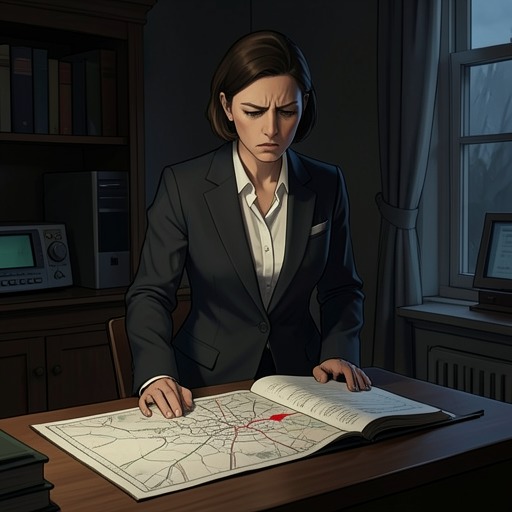
Emma is identified as Clyde Rangor’s partner, a connection raised during an investigation into his crimes. The evidence also establishes that their partnership was not an equal one: Emma had endured years of abuse and beatings at Clyde’s hands. Her later actions therefore emerge from both her participation in his criminal world and her effort to break out of his control.
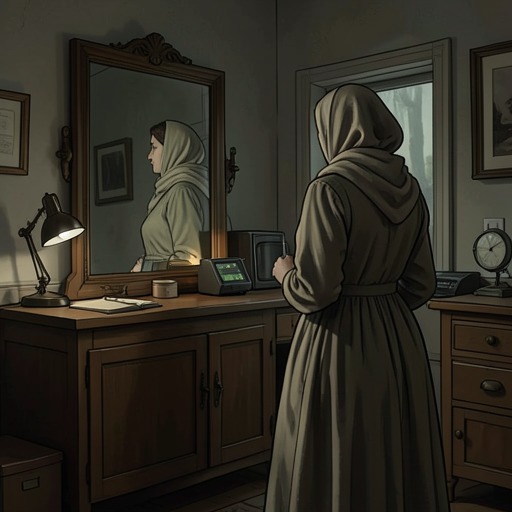
After fleeing with Olivia, Emma lived under an assumed identity as Sister Mary Rose. She taught at St. Margaret’s for seven years, according to Mother Katherine, placing her disappearance from her former life at least that far in the past by the time her identity becomes relevant to the investigation. The disguise was not simply a change of name: it allowed Emma to inhabit a religious role while concealing her history and her connection to Clyde.
When investigators revisit the nun’s identity, Yates says that Sister Mary Rose was Emma Lemay. The revelation turns what had seemed to be a separate life into part of the same criminal history. Loren Muse later traces phone records showing that Sister Mary Rose had called her, and Mother Katherine gives Loren a letter signed by Sister Mary Rose, nee Emma Lemay. The record of the call and the letter connect Emma’s hidden identity to the later effort to understand her past.
Breaking with Clyde and Flight
Emma’s break with Clyde comes during his attack on Olivia. Olivia recounts that Emma stood behind Clyde and shot him, then fired again when he turned toward her. The account presents the shooting as the point at which years of abuse culminate in decisive resistance: Emma does not retreat, and Clyde is killed.
Once Olivia can breathe again, Emma waits for her to recover and then says they need to hide Clyde’s body. The choice immediately binds the two women to a shared secret. Emma proposes taking the hundred thousand dollars Clyde had hidden at the house, splitting up, and starting new lives. The plan offers escape, but it also begins a chain of concealment: they leave together, falsify their identities, and carry the facts of Clyde’s death into the lives they construct afterward.
Emma’s actions place her in a complicated position. She helps Olivia escape a dangerous man, but she also hides a body and participates in the deception that makes their new lives possible. The narrative does not erase either side of that history. Her later decisions to shield Olivia are inseparable from the earlier choice to flee rather than bring the truth into the open.
The Killing of Cassandra Potter
Emma’s concealment extends beyond Clyde’s death. In her account of Cassandra Potter’s murder, she explains that Candace Potter was treated as someone whose death would attract little notice. Emma, acting as employer and near-guardian, called the police and presented Cassandra’s body as that of one of her girls; identification was already in the victim’s pocket. The evidence shows Emma actively managing how the death would be understood and whose identity would be attached to it.
That act deepens the moral weight of her assumed life. Emma is not merely hiding her own name: she manipulates the authorities’ understanding of a victim’s identity and helps preserve the false account surrounding the women’s past. The eventual confession therefore concerns a pattern of concealment and responsibility, not only the single act of killing Clyde.
Exposure, Death, and Confession
Emma’s hidden past eventually catches up with her. Someone discovers who she is, breaks into her small room at the convent, tortures her, and suffocates her with a pillow. Her death brings her years as Sister Mary Rose to an abrupt end, but it does not end the consequences of the secrets she kept.
Investigators believe Emma may have left material relevant to the case or information about Clyde’s whereabouts, and they regard Loren as best positioned to find it. That search leads to the letter Mother Katherine gives Loren. In it, Emma takes sole responsibility for killing Clyde, hiding his body, and lying to authorities about the identity of the murder victim. She also claims Candace knew nothing about those acts. Her statement is presented as the gist of the letter, rather than as a complete account of every detail.
The letter recasts Emma’s silence as a deliberate attempt to protect Olivia. A later explanation says that Chally and Max went to get Emma to talk, but she would not give Olivia up, whatever they did to her. They kept pressing until they went too far. Her refusal to identify Olivia thus persists even under extreme pressure, and the letter continues that protection after Emma can no longer speak for herself.
Relationships and Narrative Significance
Emma’s relationship with Clyde is both criminal partnership and abuse. She is implicated in the world they share, but his violence also defines the danger from which she and Olivia try to escape. Killing him ends his immediate control, while the decision to hide the body makes the escape dependent on secrecy and shared responsibility.
Her bond with Olivia is expressed through action rather than a fully stated account of their feelings: Emma shoots Clyde during his attack, helps plan their flight, and later refuses to give Olivia up. The protection is costly. Emma’s silence allows suspicion and uncertainty to continue around Olivia, while her eventual confession concentrates legal and moral responsibility on herself.
Emma’s years as Sister Mary Rose create a sharp contrast between public identity and private history. The nun’s name gives her a life separate from the one she fled, but it cannot permanently secure that separation. Her final letter becomes the means by which the concealed past is both disclosed and controlled: Emma reveals the crimes while insisting that Olivia did not know about them. Through Emma, the story links survival and reinvention to the burdens of concealment, and shows how a confession can tell the truth while still serving as protection for someone else.